 | Anzeigenformat: 92 mm x 47 mm Farbe: s/w Anzeigenkunde: Natur Unlimited e.K. Veröffentlicht in Zeitschrift: Liebes Land Publisher: Hannah Scholten Verlag GmbH & Co. KG, Stuttgart |


"They [the church music - note] must be on a meaningful association with the word in which the Logos spoken out added. "¹we sing the Sanctus, for example, a choral exhibition, we experience the perfect harmony between the Word of God and music, between the singing of the earthly and heavenly Church, a moment of timeless beauty.

"In the early centuries, this reputation in the liturgies of the East (4th century) and West (5th century) part of the Eucharistic Prayer ".. Holy, holy, holy Lord, God of power and might are Heaven and earth with your glory" The hem of his garment in the vision of Isaiah filled the temple, God's presence is so exuberant that the temple to appear small to be filled out of it completely. His presence goes into quite different than merely human realms. In singing exceeds the man himself so he can in the Sanctus in the mighty song of the angels tune, calling to each other constantly, the holiness of God, that shook the doorsteps of the temple. Our song reached the here and now in the celebration of the liturgy present God. [...]
If the praying Church sings: "Blessed is he that cometh in the name of the Lord", she expresses the fact that she eagerly awaits the return of Christ. The knowledge gathered for prayer, but that Christ is given to them in the Eucharist in the form of bread and wine into His body and blood. He comes into the "now" and links heaven and earth until he comes again "In the name of the Lord." ²
Almighty and eternal God, bless these branches, the symbol of life and of victory, with whom we worship Christ, our King, With songs of praise we join him in his holy city; grant that we may go through him to the heavenly Jerusalem, who lives and reigns with you forever and ever.
"The people taking part but always active and never purely passive: to unite with the priest" in faith and in silence as also in the course of the Eucharistic prayer set slots, the answers are in the opening dialogue of the preface, the Sanctus , the acclamation after the consecration and the acclamation of Amen after Schlußdoxologie and others of the bishops' conference approved and the Holy See reconnoitred acclamations ""But what is now recognized as the official text in Latin and German, this version shall prevail and shall publish in the missals.?
Sanctus, sanctus, sanctus Dominus Deus Sabaoth Pleni sunt coeli et terra gloria tua.. Hosanna in excelsis. Benedictus qui venit in nomine Domini. Hosanna in excelsis.But gray is all theory, as could be determined already in the first part of Goethe's Faust to Mephistopheles. And since we are on the right topic: The devil is in the details, here in respect of the "immemorial" the German song tradition in our country, unfortunately, extends to some weaker songs and the New Spiritual song that us with some questionable paraphrases pleased. Of abuse, any song by even the word "holy" appears, to sing instead of the Sanctus, to say nothing.
Holy, holy, holy Lord, God of power and might. Heaven and earth are full of your glory. Hosanna in the highest. Blessed is he that cometh in the name of the Lord. Hosanna in the highest.

can "In principle, any music can be used within the service, from Gregorian chant to jazz. Of course there is music that is appropriate for worship and not very suitable. It is the quality. "¹he reaps prompt opposition by the renowned Austrian liturgist Philipp Harnoncourt, incidentally, the brother of the renowned conductor Nikolaus Harnoncourt. An opposition in the match no less a figure than Joseph Cardinal Ratzinger, when he writes:
"In fact, music is supposed to serve the Christian liturgy, must follow the Logos, specifically: You must be a reasonable assignment to be the word in which the Logos has responded. It can be solved, as instrumental music, not from the inner direction of this word, which releases an infinite space, but also attracts distinctive lines. You must, by its very nature, andes than music to usher in rhythmic ecstasy, in the ecstatic stupor, in the sensual excitement [...] [...]."²Apart from that I ask myself once more, why the word theologians Christ is always so hard on the tongue, raises the question of how to clarify these statements, indicating at first only a general direction. Here, too, to help further official ecclesiastical texts, in the German speaking and must be ignored on a regular basis:
"A Church of composition is the more religious and liturgical, the more it approaches in their investment, their spirit and their humor to the Gregorian chant and, conversely, it is even less of the temple worthy, as moving away from this model. The ancestral Gregorian chant should therefore be used in abundance at the scale of worship functions again.These words are the Motu Proprio Tra le sollecitudini of St. Pope Pius X. taken from 1903. The quoted today as often as Vatican II large parts of this document, almost literally, and sets:
all may be convinced that the church does not lose its luster, even if it is accompanied only by this type of music. In particular, we see to it that the Gregorian chant by the people re-established will, so that the faithful in the celebration of the praise of God and the holy mysteries back vivid position, as was the case earlier. "
"The Church of the Gregorian chant regarded as that of the Roman liturgy singing; therefore he is liturgical in their actions, if indeed the same conditions exist to take the first place. "³is certainly not meant that in future only Gregorian chant should be sung. But at least here is unambiguously confirmed that represents for the Church of the chorale and the elaborate polyphony, a key criterion for assessing the quality of church music compositions. This confirms the already cited Joseph Ratzinger once again, this time 2007, as Pope Benedict XVI. In his Apostolic Exhortation Sacramentum Caritatis :
"Finally, I would like, although I am aware of the different orientations and the very commendable different traditions that, according to the request of the Synod Fathers of the Gregorian chant is brought to the appropriate application, since this is the actual song the Roman liturgy. [...]We, the Church is the musical development of vast space, but also sets clear limits. Or, to put it in Joseph Marx. "Not everything that sounds, is music"
More generally, I ask that future priests are prepared at the time of the seminar on understanding the Mass in Latin and to celebrate and to use Latin texts and use the Gregorian chant. One should not overlook the possibility in mind that even the faithful are taught to know the most common prayers in Latin and to sing some parts of the liturgy in Gregorian style. See "
We might add: "... and not everything that is music, is suitable as a church musician in the service of the liturgy." I would like to see more priests to rediscover again the language of the Church, and type of boundless self-expression vain Schrammel groups are not yet in a stage of the liturgy. The killer argument that there is no binding definition, is not to hold any event.

 Ich möchte meine Gedanken zum Sanctus vom letzten Monat noch ein wenig weiterspinnen und einen anderen Aspekt einbringen. Eine Schwierigkeit, mit der viele Chorleiter konfrontiert sind, ist die Ablehnung gesungener Messkompositionen durch den Zelebranten. Es sei eindeutig verboten, dem Volk das Sanctus gleichsam zu entreißen, und mitten im Hochgebet eine konzertante Einlage zu bieten. Dieser Meinung ungeachtet trifft man gleich in der Nachbarkirche auf einen Pfarrer, der gesungene Messen schätzt, und die Kirchenmusik entsprechend fördert.
 "The liturgical reform of Vatican II to promote the active participation of the whole community, so called for the role just Implementation of the liturgical celebration and allowed the liturgy in the vernacular languages. The traditional liturgical practice of polyphonic church music seems just put this in question: the listening community is not a holistic, active participation is possible and, where appropriate, is not the liturgical roles balanced. In addition, the majority of the community is ignorant of the Latin language.Even this brief excerpt from the document cries out for a number of comments. I will not now constitute a systematic, but more or less after the brainstorming principle briefly touch on:
dominated the liturgy of polyphonic church music, there is generally a risk that professional musicians, but also amateur and amateur ensembles singing exclusively draw in itself. Therefore recommends that the Congregation for Divine Worship and the Discipline of the Sacraments: "If the church music within a service is listed, they should adapt to its character. This often required to restrict the use of works that date from a period in which the active participation of the faithful has not seen as a source of true Christian spirit "(statement on" Concerts in Churches ", No. 6,. similar to already see No. 53 of Instruction on Music in the Sacred Liturgy "Musicam Sacram" in 1967).
"restriction" of traditional polyphonic church music within the liturgy, of course, must not be confused with their complete banishment. Here is a case-by case, a careful balancing is needed. Is certain: not since such works rarely cultural treasures of high rank, they must not be forgotten. If they find no suitable positioning within the liturgy more to offer, outside of worship, many attractive opportunities. "

"Die oben erwähnten Eigenschaften besitzt in hohem Grade auch die sogenannte klassische Polyphonie, besonders die der römischen Schule, die im 16.Jahrhundert durch Pierluigi Palestrina zu ihrer höchsten Vollendung geführt wurde und auch später noch Werke von hervorragendem liturgischem und musikalischem Wert hervorgebracht hat. Die klassische Polyphonie berührt sich nahe mit dem Gregorianischen Choral, diesem einzigartigen Vorbilde aller Kirchenmusik. Deshalb wurde sie für würdig befunden, zusammen mit dem Gregorianischen Choral bei den höchsten kirchlichen Feierlichkeiten, wie es die päpstlichen Gottesdienste sind, zur Verwendung zu gelangen. Daher soll auch sie in weitem Umfange beim Gottesdienst wieder eingeführt werden, besonders in den hervorragenden Basiliken, in den Kathedralen, in Seminarien und anderen kirchlichen Instituten, . Where does it necessary powers and funds is no shortage of "The Instruction on Music in the Liturgy," Musicam Sacram ", published by the Roman Congregation of Rites in 1967, highlights the qualitative importance of church music:
fourth a .) And only those music sacred music called that is made for the celebration of divine worship and as identified by the holiness and goodness of its formsKonzilskonsitution "Sacrosanctum Concilium" formulated in the 6th Chapter:
b) the concept of sacred music come into consideration here: the Gregorian chant, the old and new polyphony in its various genres, Musica Sacra, which allowed for the organ and other instruments was created and the church Folk song, liturgical as the religious. The
112th The musical tradition of the universal Church is a treasure of inestimable value, distinguished from all other forms of artistic expression, especially because it is what lies at the connected with the sacred music and words is a necessary and integral part of the solemn liturgy. In fact, both the Scriptures as the Holy Fathers of the worship songs have donated high praise, as is the Roman popes in modern times in the wake of Saint Pius X. the ministerial function of sacred music in worship mit größerer Eindringlichkeit herausgestellt haben. So wird denn die Kirchenmusik um so heiliger sein, je enger sie mit der liturgischen Handlung verbunden ist, sei es, daß sie das Gebet inniger zum Ausdruck bringt oder die Einmütigkeit fördert, sei es, daß sie die heiligen Riten mit größerer Feierlichkeit umgibt.
116. Die Kirche betrachtet den Gregorianischen Choral als den der römischen Liturgie eigenen Singing; therefore he is liturgical in their actions, take if, moreover, are given the same conditions, the first place. Other types of sacred music, especially polyphony, are for the celebration of the Liturgy by no means impossible, if they meet the spirit of the liturgy within the meaning of Article 30.
 What is it but now with the Sanctus that are supposedly sung by the people must and therefore a popular lever to banish traditional mass compositions of the liturgy in the concert business? In the General Instruction of the Missal (AEM) says:
 "55 b) Sanctus call. The whole community is united with the heavenly powers, sings or speaks the Sanctus This call is part of the Eucharistic Prayer and is of . all presented together with the priest "¹in which - apart from the trade shows in the Ordinary Form in Latin - not yet final" basic order of the Roman Missal "(2002 GRM) is almost identical:
" 79 b) The acclamation: It unites the whole assembly with the celestial Powers and sings the Sanctus. . This acclamation, which is part of the Eucharistic prayer itself is, by all the people argued with the priest "isLater in the document adopted this scheme a number of times:
" 147th [...] The Eucharistic Prayer requires ago by its very nature that it alone maintains the priest by virtue of his ordination. But the people united with the priest in faith with silence and by acclamation, as laid down in the course of the Eucharistic prayer, that the answers in the dialogue of the preface, the Sanctus, [...]"
"216th The preface by the principal celebrant alone sung or spoken, the Sanctus . But is sung by all the concelebrants together with the people and the Schola or spoken "Obviously the situation is therefore quite clear: polyphonic mass compositions may be heard in the show but not the Sanctus, as this is the whole town is given up singing Interestingly.. this opinion to the council in our days have become the dominant, although it is compatible neither with the tradition, is still justified or somehow logically opens.
 Joseph Cardinal Ratzinger said during a lecture in 1994, the adoption of his brother George as Director of Music of the Regensburg "Regensburg tradition and die Liturgiereform". Er greift zunächst ein Zitat von Joseph Lengeling auf, dass sich übrigens nahtlos in eine gewisse akirchenmusikalische Strömung einfügt, die auch Rahner und Vorgrimler in ihrem teilweise bedenklichen, heute aber immer noch weit verbreitetem Konzilskompendium vertreten:
 "Mein ehemaliger Münsteraner Kollege und Freund Emil Joseph Lengeling hat gesagt, wenn man das Sanctus als authentischen Part der Gottesdienst feiernden Gemeinde versteht, 'so ergeben sich daraus nicht nur zwingende Folgerungen für neue Vertonungen, sondern auch Exklusiven für die meisten gregorianischen und für alle polyphonen Vertonungen, da sie das Volk vom Gesang ausschließen und den Rufcharakter nicht beachten.'Later that very clearly defined and highly readable article refutes Ratzinger's statements Lengeling founded. He postulated even a completely different approach when it would "do well" to the congregation, before departing in the middle to remain the mystery for a while in silence filled. A silence in abundance, mind you, not a silent waiting. It is this silence is capable of uniting the whole community and real. Ratzinger further formulated
shows With all respect for the great liturgists of that word, that even experts can fall sharply next. Mistrust is first installed there where a large part of living history to the dustbin off taner misunderstandings to be thrown. This is particularly true for the Christian liturgy which thrives on the continuity and the internal unity of the history of believing prayer. "²
"Must not we just learn this silent inner pray with each other and with the angels and saints, the living and the dead, with Christ himself again, thus used formulas, the canon words are not, which will be in vain new by ever word assemblies try to replace, in for, as only the actual inner Abswesenheit ds event of the liturgy, looking to cover up the awakening of human speech at the touch of the eternal into it? "Conclusion: It is always recommended that the whole congregation together the Ordinary, and thus also sings the Sanctus. For the Extraordinary Form of the Roman Rite (Missa Tridentina) the situation is slightly different and in any case clear. As for the post-conciliar liturgical reform, can unfortunately be no clear statement as to the relevant documents are vague and contradictory. In no case can be of a flat ban on polyphonic church music for the Sanctus assume, as I reference the documents of the Council and its predecessor - so to Pius X. have demonstrated - to be "Tra le sollecitudini" well-known clearly. This requires also by the fact that the Roman rite since Benedict XVI. two different forms knows that may be contradictory to such a crucial point is not diametrically opposed. Unless they wanted to postulate a "hermeneutics of rupture".

 On 26 September, Professor Markus Eham a lecture at the opening of "daily of new church music" of the Bavarian (arch) dioceses that HERE and HERE have already been discussed in this blog. From an attentive fellow readers, I was pointed to this speech, and I have downloaded and thoroughly read the text: PDF DOCUMENT .
 The liturgical tones 2007 Rome were heard here, not exactly sound for the future, but more steps to extraordinary cadenza on the 19th Back to the 16th century Century. Church Music was this ritual flashback but not specifically spelled out, the Motu proprio Summorum Pontificum and the papal accompanying letter contained not a word about the musical form of the extraordinary Meßritus - actually revealing consistently as singing and music in the pre-Vatican II view just does not contribute significantly to Liturgy belong.Professor Markus Eham, who teaches at the University of Eichstätt including liturgy shows here from a strange Limited View, even from a long-vanquished "Los von Rom" setting, which may even be raising questions about his suitability as a university professor for this subject at a Catholic (!) University. First, the mere polemic against the Extraordinary Form of the Roman Rite (Missa Tridentina) no longer seems appropriate. Pope John Paul II In 1986 a commission of nine cardinals following two questions:
The answer, of the nine cardinals was given was, "No, the Mass of Sts. Pius V has never been banned. "
The nine cardinals joined in the fact that no bishop may forbid a Catholic priest to read the Tridentine mass.in December died in 2007, Cardinal Stickler, a member of this Commission was reported, furthermore, that eight cardinals, and only one against it was to make it through a papal decree in public that every priest freely between the new and the old rite could choose. For the nine-member commission included Cardinal Joseph Ratzinger, Paul Augustin Cardinal Mayer, Silvio Cardinal Oddi, Alfons Maria Cardinal Stickler, Agostino Cardinal Casaroli, Bernardin Cardinal Gantin, Antonio Cardinal Innocenti, Pietro Cardinal Palazzini and Jozef Cardinal Tomko. ¹
"[The constitution has liturgy] in Article 121 of the church musicians a double mission in the root directory der liturgischen Erneuerung geschrieben: Sie sollen den Schatz der kirchenmusikalischen Überlieferung bewahren und das Repertoire durch Kompositionen nach den Erfordernissen für die erneuerte Liturgie weiterschreiben. Die Kirche will also auch musikalisch Zeitgenossenschaft; erfährt sie sich doch, wie es in der Pastoralkonstitution heißt 'mit der Menschheit und ihrer Geschichte wirklich engstens verbunden.' Der Glaube wurzelt zwar in einem Ereignis von damals, aber er ist nicht von gestern."Dem ist prinzipiell zuzustimmen. Zu klären wäre freilich die Frage, was denn genau unter "Zeitgenossenschaft" zu verstehen ist: Jazz? Messiaen? ACDC? Hertel und Mross? Philip Glass? John Rutter? Bemerkenswert Hermeneutics is the break after the Council, the Eham postulated here in the next sentence the first time. The nebulous "requirements for the renewed liturgy" to be brought into play here. An often used phrase. But what exactly does a song is different to the offertory before the Council of a song for the offertory, after the Council? What is the difference between a pre-Vatican Conciliar the Agnus Dei?
"To preserve in the care, the self, conceived of the church and its liturgy, then more and more as a special and alternative world for their presence for." Sacredness of the liturgical act of religious "expression," A corresponding "was required; Cecilian of the movement marked, this will be computed as a defining style for Ideal Standard, for the want of the Gregorian chant and polyphony Palestrina brand sponsor.Hier wird nicht klar, wann "später" ist, oder wer überhaupt wann mit wem diskutiert haben soll. Da Professor Eham kein Zitat kennzeichnet, nehme ich an, er stellt diese rhetorische Frage dem anwesenden Festpublikum. Hier greift er allerdings erneut zu kurz: keineswegs hat sich die Kirche durch eine Bunkermentalität das "Eigene" bewahren wollen, sondern die intellektuellen Strömungen "der Gegenwart" wendeten sich bewusst und eindeutig von der Kirche ab oder gar gegen sie. Inwiefern der Cäcilianismus römische Lehraussagen zum Thema Kirchenmusik beeinflusste, to be seen. Giuseppe Cardinal Sarto, who later became Pope Pius X., has not met for the first time in 1903 in Tra le sollecitudini concrete conclusions about church music, but much earlier as the patriarch of Venice, in pastoral letters to the termination of abuses, such as invasion of secular opera music in the worship urged. The remainder of this section Eham stresses again the need to create modern church music before he comes to the following statement:
[...]This attempt at a musical identity has to have the issue discussed later prepared for: Is there really the "music the church" as a stylistic repertoire determinable, oder müssten wir nicht richtiger von "Musik für den Gottesdienst der Kirche" sprechen, die der jeweiligen Zeit und Kultur entspricht?"
"The theological and legal basis of this opening to the church music contemporaries can be summed up in a few guiding principles: it is' no kind of quality full religious to promote music of the liturgical celebrations 'excluded, which is capable of' prayer and to express the mystery of Christ: 'holder of the liturgy is' the whole community, with Christ the head, united body. " This calls for music that allows the active, full, conscious participation of all in the singing or hearing Mitvollziehen. "This statement, based on the " third party based instruction for the proper implementation of Konsitution on the Sacred Liturgy " is in principle completely correct. It is interesting to note on the church law that is perceived here again but only selectively. Eham suppresses plain and simple die klaren Aussagen der Kirche ( HIER von mir thematisiert) über den Wert der Gregorianik und der Vokalpolyphonie als Qualitätskriterium für die perfekte Verbindung von Wort und Klang, Zeit und Raum in der Liturgie, die er oben noch als liturgischen Rückschritt ins 16. Jahrhundert ("Marke Palestrina") abqualifiziert. Ferner liegt auch diesen Aussagen wieder die Verkürzung des Begriffs der participatio actuosa vor. Ein Begriff, der von Pius X. eben im Zusammenhang mit der Erneuerung der Gregrianik und der ausdrücklichen Förderung der Polyphonie geprägt wurde.
"I see two dangers in our worship area. The dullness of routine and the tendency to aesthetic mummification of the liturgy I suspect both strike or are related to a rampant Jesus oblivion in church and theology in favor of the ruling Christ in love. modern sacred music could, however, in its sensuous immediacy of an important voice expect to be revelation [...]"I agree with Professor Eham in his assessment of the two Gefahren für die Liturgie vollkommen zu, schon die folgenden Sätze lassen mich aber einigermaßen ratlos zurück. Wie kann man Jesus gegen den Christus ausspielen? Oder anders gefragt: welche liturgischen Auswirkungen sollte eine Fokussierung auf Jesus im Gegensatz zum Christus mit sich bringen? Ich hege hier den Verdacht der theologisierenden Wortklauberei ganz in der Schule Karl Rahners, der so gelehrt klingt, weil ihn niemand versteht, und in dessen monströsen Satzungeheuern oft erstaunlich wenig Substanz übrigbleibt, wenn man sich die Mühe macht, sie aus den Phrasen herauszuklopfen.
"Sie haben unter 2c sehr sorgsam und genau meine wesentlichen Aussagen zur sakralen Musik wiedergegeben und dann am Schluss kritische Bemerkungen angeknüpft. Ich gestehe, dass ich Mühe habe, diese Fragen zu verstehen, denn weder habe ich einfach einen retour zur Gregorianik gefordert, noch habe ich bestritten, dass der Geist auch heute Komponisten und Musiker inspirieren kann. Ganz im Gegenteil sage I [...]: 'Who is watching closely is probably assume that it is precisely in our time from the inspiration of faith out important works of art both in the area of \u200b\u200bthe image as in the field of music (and in the literature) are Created and . arise Even today, the joy in God and the contact with his presence in the liturgy an inexhaustible power of inspiration. The artists, who submit to this order need not be true as a rear guard of the culture to understand [...]'. Not return to the past, I call it taking measurements show the great principles of the basic shape of liturgical art [...]"This quote, the basic problem of the statements Professor Ehams sehr gut: die Angst davor, sich demütig in eine Tradition zu stellen - und die eigenen Werke an den Vorbildern der Vergangenheit messen zu lassen. Werke, die gemeinhin Sacro-Pop, Neues Geistliches Lied oder ähnlich genannt werden, auch die Gesänge aus Taizé, wären auf diesem Hintergrund gar nicht denkbar. Leider gerät Eham auch mit seiner Aussage im sechsten Punkt "Im Gottesdienst geht es um das, was wir nicht erwarten, sondern nur hoffen können" aufs Glatteis: dank der Verheißung Christi wissen wir sehr genau, was uns im Gottesdienst erwartet, und worauf wir für die Zukunft hoffen. Genau dieses Moment wird ja im Gesang des Sanctus ganz deutlich!

 Granted, it's not quite the right time, a few weeks before Christmas once again fall back on Good Friday. But some issues are just a perennial favorite. In particular, the discussion about the Catholic Church and its alleged anti-Semitism, which is kept alive only by certain interest to you. As a church musician
My people have what I done to you, I'm only making
have you?
Answer me.
from slavery in Egypt habe ich dich herausgeführt.
Du aber bereitest das Kreuz deinem Erlöser.
Heiliger Gott.Vierzig Jahre habe ich dich geleitet durch die Wüste.
Heiliger, starker Gott.
Heiliger, starker, unsterblicher Gott, erbarme dich unser.
Ich habe dich mit Manna gespeist
und dich hineingeführt in das Land der Verheißung.
Du aber bereitest das Kreuz deinem Erlöser.
Was hätte ich dir mehr tun sollen und tat es nicht?
Als meinen erlesenen Weinberg pflanzte ich dich,
du aber brachtest mir bittere Trauben,
du hast mich in meinem Durst mit Essig getränkt
und pierced with a lance thy Redeemer the page.
your sake I have beaten
Egypt and its firstborn
but you have beaten me and handed down the death.
- A: My people ...
I've brought out of Egypt and Pharaoh
can sink in the Red Sea,
you but I handed the chief priests.
- A: My people ...
I have set before thee blazed a path through the sea, but you have
opened by a lance my page.
- A: My people ...
In a pillar of cloud, I am pulled forward to you, but you have me
brought before the tribunal of Pilate.
- A: My people ...
I have fed thee with manna in the desert, but
you got me in the face
and castigated me.
- A: My people ...
I gave you to drink water from the rock and saved you, but you have
impregnated me with gall and vinegar.
- A: My people ...
your sake I struck the kings of Canaan,
you hit me but with a tube on my head.
- A: My people ...
I gave you a royal scepter in hand, but you
hast crowned with a crown of thorns.
- A: My people ...
I raised up and equipped with great power, but you
me higher on the wood of the cross.
- A: My people ...
 Are the Improperia a reproach to the synagogue? Or even to the Jews living today? Absolutely not! Who wants to celebrate Easter, bear in mind, why the atoning death of Jesus took upon himself. The doctrine of the atoning death of Christ goes back to Paul, but is then absorbed first by Augustine, who developed the doctrine of original sin:
 Lord our God, through the writings of the Old and New Testaments you lead us into the mystery of this holy night. Open our eyes to the work of Thy mercy and grace of this gift to us through the Easter Vigil, the firm confidence that our life in your Glory is completed.the actions of the Saviour on the Cross are not only to the people of Israel or Jews in general terms, but they stand in the tradition of the prophets who warned the people in view of the saving acts of God, to conversion and penance (see, for B. Micah 6 or Isaiah 5). Further evidence is found in songs like "O head, covered with blood and wounds" (GL 179, 4 and 5), where the whole question of sin, atonement and redemption is expressed:
What have you, Lord, endures Everything is my burden.
I, I'm indebted to endure what you have. [...]
I thank you from my heart, O Jesus, dearest friend,
für deines Todes Schmerzen, da du's so gut gemeint.


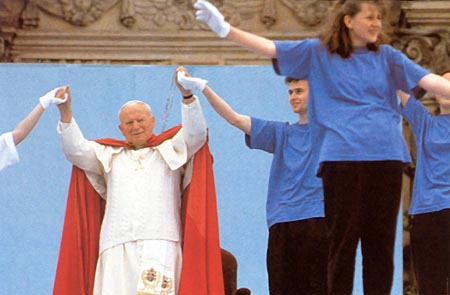 eradicate the discussion on dance in worship, which have unfortunately experienced by the ongoing liturgical abuses in the pontificate of John Paul II's constant buoyancy. 1975 was the Roman Congregation for Divine Worship and the Discipline of the Sacraments a document entitled "Liturgical Dance", in which she clarified:
 dance can be made in any form an integral part of liturgical celebrations. For a very unholy and sacrilegious element would be introduced into the liturgy, and that would create a secular atmosphere for all participants and attendees to worldly places and situations should remember.In 1998 the same congregation to the Bishop of Honolulu to ban hula dances in liturgical contexts, which were in Hawaii long ago entered the liturgy. But when John Paul beatified 1995 by Father Damien DeVeuster, the famous saint of the lepers of Hawaii, traveled to Brussels, was performed at a central point of the ceremony, a hula dance.
 In 2002, John Paul II was in Mexico for the beatification of two martyrs of the Mayan people. On that occasion the papal Zeremoniar Archbishop Piero Marini various dances integrated into the liturgy. At the end was a sort of cleansing ceremony called "Limpia" performed by the dancers who appeared with incense bowls and the Pope and other cardinals and bishops present sprinkled with herbs. This ritual is used to cure physical and mental illness by driving out evil spirits. In fact, the Pope was exorcised so before the eyes of the public in a pagan ritual. Understandably, there was behind sharp protest from both Mexico and the Vatican circles. Archbishop Marini certainly saw no reason to change his questionable Inkulturationspolitik.
 is no expression of Christian liturgy. Gnostic-docetic circles around him in the 3rd introduce into the liturgy century attempted. For them, the Crucifixion only Certificate: Christ had left the body he never really adopted before the Passion, and so could take the place of the Cross liturgy of the dance, because the cross was indeed been a sham. The ritual dances of the different religions have different directions - spells, analogy magic, mystical ecstasy -, none of these figures corresponds to the inner direction of the Liturgy of the Word-like "victim.Dania in the book "La danza sacra nella chiesa" (Rome, 2000) on the spread of the liturgical dance straight from Pentecostal, Protestant circles in the liturgy of the Catholic church (I assume a translation Heinz-Lothar Barth):
is completely absurd it, if in trying to make the liturgy "attractive", dance pantomimes - to be inserted, which then often lead (rightly from their investment ago) in applause - perhaps by professional dance groups.
Wherever applause for making human breaks in the liturgy, this is a sure sign that the essence of the liturgy completely lost and replaced by a kind of religious entertainment has meant. Such appeal does not last long; on the market of leisure activities, which increasingly forms of religion involves as a thrill, the competition is not to exist.
I have seen how the act of repentance was replaced by a dance presentation, found the course very well received, one could of what repentance really is, remove next? Liturgy can only attract people when they do not look at himself, but in God, and if they enter it and can act. Marco writes
These experiences bring, however, lose the risk, the sacramental dimension of faith from the view, show a certain narcissism and are the fruit of a solipsistic (to themselves fixed) behavior.Although the rejection of dance in the liturgy of the Church is clear and the danger of the uncritical and arbitrary insertion of foreign elements has been demonstrated in the liturgy, offer numerous katholische Bildungshäuser und andere Kursanbieter nach wie vor Ausbildungen für liturgischen Tanz an. Übrigens verdreht auch Dania Marco die Quellen nach belieben oder ignoriert vorangeganene kirchliche Verurteilungen. Ihr Buch ist leider ein typischer Spiegel der nachkonziliaren Tendenz, alles, was vor dem II. Vatikanischen Konzil war als überholt zu sehen und einschlägige Dokumente einfach zu ignorieren.
I demand from the dance - more than all the other arts - that he reveal the divine in man.The quote is from Murshida Kamae A. Miller, a Scottish representative of Sufism. In a course description of the house of Clara cell top it says:
"Liturgical Dance" - this term means above all to dance NEW SPIRITUAL SONGS . However, it has its place not only in the liturgical context, but wherever there are people ein Bedürfnis ist, ihre Lebenssituationen und Glaubensvorstellungen mit der Sprache ihres ganzen Körpers zum Ausdruck zu bringen.Es könnten noch deutlich mehr Quellen angebracht werden, aber schon in diesen zwei Zitaten findet man das Kreisen des Menschen um sich selbst deutlich bestätigt. Im letzten Zitat wird ja gar nicht erst behauptet, dass es darum gehe, den Glauben der Kirche ("ganzheitlich" - um ein modernes Schlagwort zu gebrauchen) erlebbar zu machen, sondern es geht um das körperliche Ausleben eigener, subjektiver Glaubensvorstellungen.
They placed the ark of God upon a new cart and brought them so Abinadab from home, which stood on a hill, Usa and Ahio, sons Abinadab, directed the new car [Then they took them out of the Abinadab house that stood on the hill], with the ark of God and Ahio went before the ark. David and all Israel danced and sang before the Lord with all your devotion and played on dulcimers, harps and drums, rattles and cymbals.say something later, then at the same point: As we reported
King David: The Lord is the house of Obed-Edom and everything he gehört, um der Lade Gottes willen gesegnet, da ging David hin und brachte die Lade Gottes voll Freude aus dem Haus Obed-Edoms in die Davidstadt hinauf. Sobald die Träger der Lade des Herrn sechs Schritte gegangen waren, opferte er einen Stier und ein Mastkalb. Und David tanzte mit ganzer Hingabe vor dem Herrn her und trug dabei das leinene Efod.Deutlich ist hier zu sehen, dass es sich um eine persönliche Gefühlsregung in einem außerordentlichen Moment handelt. Weder haben wir es hier mit einer kultischen Handlung im eigentlichen Sinne zu tun, noch gibt es irgendwelche Berichte, dass Davids Tanz in den altjüdischen Tempelkult aufgenommen worden wäre.
 live the word of Christ in you richly teach and admonish one another in all wisdom, in psalms and hymns and spiritual Songs, singing with grace in your hearts. - Apostle Paul's letter to the Colossians

 What does a designer of automation or human-computer interfaces in general need in order to build fail- and fool-proof automation and assistance for human operators? We are currently working on a definition of prospective design and a comprehensive performance shaping factors model (Warnemuende Model, see figure above; click to zoom in) which reviews many empirically validated factors that influence safety and efficiency of operators in complex and dynamic systems. Figure from: Gèrard, N., Huber, S., Nachtwei, J., Satriadarma, B. & Schubert, U. (submitted in Oktober 2009 Journal on Human-Computer Interaction). A Framework for Designers to Support Prospective Design of Human Computer Interaction.

 Assessment centers (AC) are quite popular in practice but often built on a shaky definition of dimensions, sketchy job specifications, fragmentary training of assessors and so on. In order to ensure a methodologically sound implementation of assessment centers in practice, criteria for AC quality are gathered, discussed in academic settings as well as with experts from HR practice. After some iterations a computer programme will be designed which enables a theory-driven, empirically verified as well as practical evaluation of AC quality. details

 Fast and adequate acquisition of samples of participants is a core pre-requisite for efficient psychological research. This is ensured by a web-tool, which allows researchers from HU Berlin and prometei to choose from 4000 participants from all ages and job backgrounds and invite them per e-mail to lab studies. The tool was adapted from ORSEE and expanded. details
  Inferential statistics is the toolbox in many disciplines and powerful if adequately applied to data from psychological or human factors studies. This wiki offers support for students and researchers by offering hands-on guidelines for standard statistical methods, discussions about special topics as well as a comprehensive collection of links to useful resources. details


